Lytus C.O.R.E vs Clay: Two Different Tools for Two Different Jobs
Clay and Lytus C.O.R.E both help B2B sellers find better prospects. But they solve different problems in completely different ways. Here's an honest comparison so you can pick the right one.
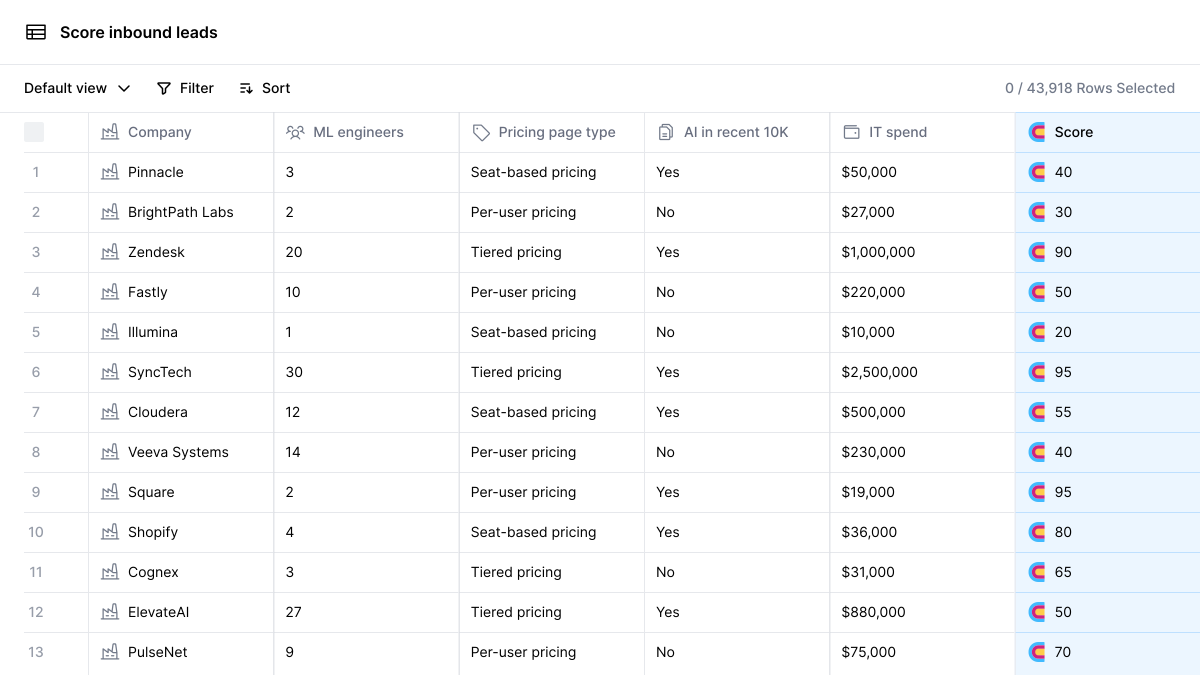
Clay and Lytus C.O.R.E both get mentioned when people ask about finding better B2B leads.
But they solve different problems at different stages of the outreach process. Using the wrong one for your situation will frustrate you regardless of how good either tool is.
Here's an honest breakdown of what each does, who it's for, and when to choose one over the other.
What Clay Does
Clay is a data enrichment and research automation platform. You bring a list of companies or people — from Apollo, LinkedIn, a CSV, anywhere — and Clay enriches each row by pulling from 50+ data sources simultaneously.
It can find emails, phone numbers, LinkedIn profiles, company tech stacks, firmographic data, recent news mentions, and more. You can also build custom research workflows — for example:
"For every company on this list, find the CEO's LinkedIn, check if they posted in the last 30 days, pull the post text, and write a personalised first line using AI."
That kind of workflow is what makes Clay powerful for sophisticated outbound teams.
The learning curve is steep. Clay is genuinely complex — it's essentially a spreadsheet with superpowers, and mastering it takes real investment. But teams that invest in learning it can build research pipelines that would otherwise require a full-time researcher.
What Lytus C.O.R.E Does
C.O.R.E doesn't start with a list. It starts with signals.
You define your Ideal Customer Avatar — who you're selling to, what signals matter, what confidence threshold you want. C.O.R.E then monitors 12 public data sources continuously, watching for events that indicate a company is entering a buying window:
- Funding announcements
- Specific hiring patterns
- Review spikes on competitor tools
- Ad spend increases
- Leadership changes
When enough signals converge for the same company, C.O.R.E alerts you with a plain-English explanation: this company, these signals, this week, this angle.
You didn't build a list of 1,000 companies and research them. You waited for the market to tell you who's ready.
The Core Difference: List-First vs Signal-First
This is the fundamental split between the two tools.
Clay is list-first. You already know which companies you want to target — you need better data about them, and you need to personalise outreach at scale. Clay makes your existing list more powerful.
C.O.R.E is signal-first. You don't start with a list — you start with a market. C.O.R.E watches that market and tells you which companies have entered a buying window. The list is the output, not the input.
These are genuinely different approaches to the same problem. Neither is wrong. They're built for different workflows.
Who Should Use Clay
Clay is the right choice if:
- You have a defined target account list (TAL) you're working through systematically
- You have someone who can invest time building and maintaining workflows
- You're doing account-based outreach where deep research on each account matters
- Your outreach volume is high enough to justify the complexity
Clay works best for experienced outbound teams who already understand their ICP and want to go deeper on each account. It's a power tool — it rewards investment.
Who Should Use Lytus C.O.R.E
C.O.R.E is the right choice if:
- You don't want to maintain a static list — you want the market to surface opportunities to you
- You're selling $1,000–$50,000 B2B services where timing matters more than volume
- You want to be alerted when a company enters a buying window, not research all accounts continuously
- You're a solo founder or small team without time to build research workflows
C.O.R.E works best for people who have been burned by static database tools and understand that timing is the real problem in B2B outreach.
Can You Use Both?
Yes — they complement each other well. C.O.R.E surfaces companies that are in a buying window. Clay enriches those companies with deeper contact data and helps you personalise outreach at scale.
If you're running serious outbound and have the budget and time for both, that combination is powerful. But if you're choosing one:
- Already have a list and need better data → start with Clay
- Don't have a list and want the market to tell you who's ready → start with C.O.R.E
Pricing at a Glance
Clay's pricing is credit-based and scales with how many rows you enrich and which data sources you use. It can get expensive quickly at high volume — particularly if you're using premium sources in your waterfall.
C.O.R.E is a flat monthly subscription. MVP pricing starts at $75 for your first month, with founding member rates of $700/month for months 2–7 and $800/month standard. No per-row credits. No surprise bills.
The Honest Summary
Clay is one of the most powerful B2B research tools available. If you have the time to learn it and the list to apply it to, it's worth it.
C.O.R.E solves a different problem — it finds the list for you, based on who's signalling need right now.
Apollo tells you who exists. Clay tells you more about who exists. C.O.R.E tells you who's ready to buy right now.
150 founding member spots open until April 10, 2026. Trial from $75 →